


So you’re thinking about eloping on the Big Island. Amazing! This island has a way of making big decisions feel simple. Eloping here is no exception, once you know the few steps that actually matter.
We’ve guided couples through this process from every corner of the mainland (and a few from overseas), and the truth is, the legal side of eloping in Hawaii is refreshingly uncomplicated. The part that trips people up isn’t the paperwork — it’s not knowing what to expect. So let’s walk through it together.
Step 1: Get your Hawaii marriage license
This is the one piece every couple legally needs, and it’s simpler than most states.
- Apply online at emrs.ehawaii.gov before you arrive. You’ll pay a $65 fee ($60 application + $5 portal fee) and receive an Authorization Code. Save this, you’ll need it.
- Meet a licensing agent in person, both of you together. Proxies aren’t allowed, so this step has to happen once you’re on-island. For the Big Island, the Department of Health’s neighbor island contact is (808) 974-6008, or a private licensed agent can meet you. Our team will assist you with finding an agent that will either come to you to located close to your hotel or condo/rental house.
- Bring valid photo ID — passport, driver’s license, or state ID. If either of you finalized a divorce or lost a spouse within the last 30 days, bring that certified document too.
- Say “I do” within 30 days of picking up your license. There’s no waiting period, so you could technically get your license and marry the same day.
A few things that make Hawaii easier than most places: no residency or citizenship requirement and no witnesses required. Most of our elopements only have the officiant and the photographer present!
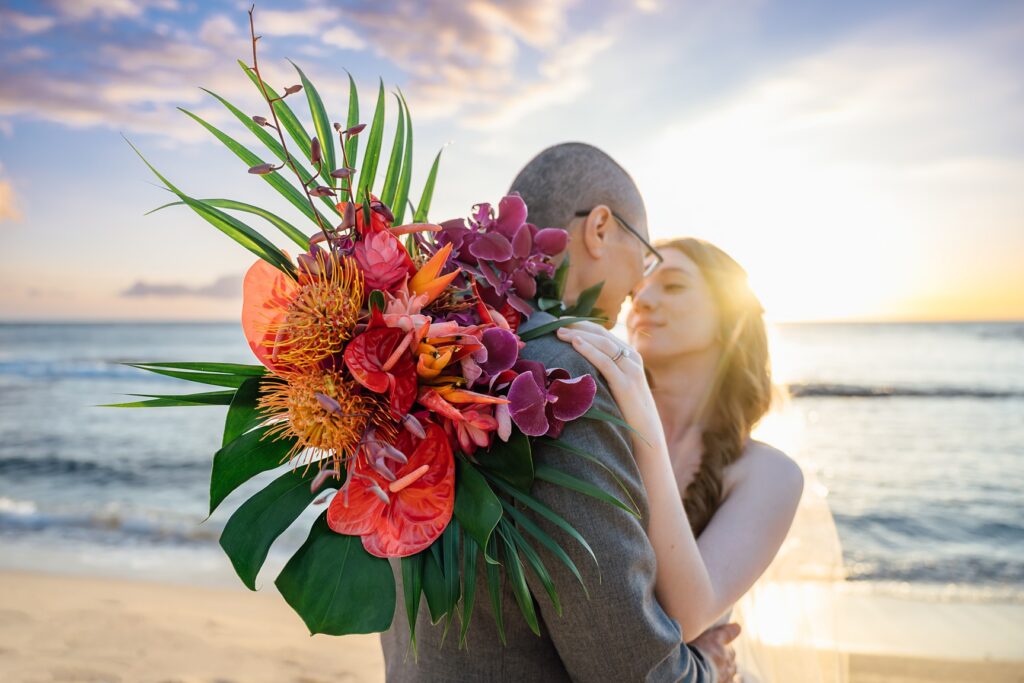
Step 2: Handle your location permit (We got you on this!)
Here’s the part couples don’t always expect — most of the Big Island’s most beautiful ceremony spots are public land, which means a permit, not just a marriage license, is what gets you legal permission to say vows there.
- State parks and beaches typically require a Special Use Permit, and for state park land, applications should go in about 45 days before your ceremony. A handful of beaches do not require this much processing time for a permit. An experienced planning team should be able to guide you through this!
- Many beach permits also require a $1 million liability insurance policy — sounds daunting, but a one-day event policy for this usually runs $75–150, and it’s a standard, quick add-on. Going with a planning team will make this part easier as they already carry this liability policies and can therefore set-up an event covered under their insurance policy.
- Every location is a little different, and rules change, so this is genuinely the piece worth handing off to someone who does it regularly rather than guessing.
This is exactly the part of the process we handle for our couples. Permits, insurance, paperwork, timing — it’s already built into how we plan every elopement, so it’s one less thing on your list.

Step 3: Choose your location and season
The Big Island gives you options no other Hawaiian island can — black sand beaches, waterfalls, volcano, and dramatic cliffside valleys, often within an hour’s drive of each other.
Shoulder seasons (March–May and September–November) tend to offer the sweet spot: fewer crowds, milder weather, and beautiful light for photos. Summer brings warmth with the occasional tropical shower, especially on the lush windward side near Hilo, while winter brings more rain island-wide but still plenty of gorgeous days. Honestly, there’s no bad time — it’s more about which version of the island’s beauty you want in your photos.

Step 4: Know what your day will actually look like
Most elopements here run a few hours, not a full wedding-day timeline: getting ready, first look (if you want one), your ceremony, and a photo session at one or two locations while the light is at its best. Simple by design — which is the whole point of eloping in the first place.
Once the ceremony and photos wrap, a lot of couples like to close out the day with a dinner just for the two of you — it’s a natural way to sit down, take it in, and celebrate before the day ends. If that’s part of your vision, it’s worth booking a reservation well ahead of time, especially if you’re hoping for a sunset table or an oceanfront spot, since the best ones fill up fast during peak season. Some couples prefer something even more private, like a beachside picnic or an in-room chef’s dinner arranged through their resort. Either way, it’s a nice finishing touch — and one more thing we’re happy to help you plan for so it’s already sorted before you land.

You don’t have to plan this alone
This is exactly why we exist. Elope Big Island handles the permits, the officiant, the timeline, and the location scouting, so the only thing you have to plan for is showing up in love. If you’re ready to talk through what your day could look like, get in touch — we’d love to help you make it real.
Frequently asked questions
Do we need to be Hawaii residents to get married here? No. There’s no residency or citizenship requirement to marry in Hawaii.
How much does a Hawaii marriage license cost? $65 total, paid during the online application at emrs.ehawaii.gov.
How far in advance do we need to apply for a location permit? For state park ceremonies, plan on submitting your Special Use Permit application about 45 working days ahead of your date. We handle this timeline for our couples as part of planning.
Can we get married the same day we pick up our license? Yes — Hawaii has no waiting period. Your license is valid for 30 days after you pick it up.


View comments
+ Leave a comment